

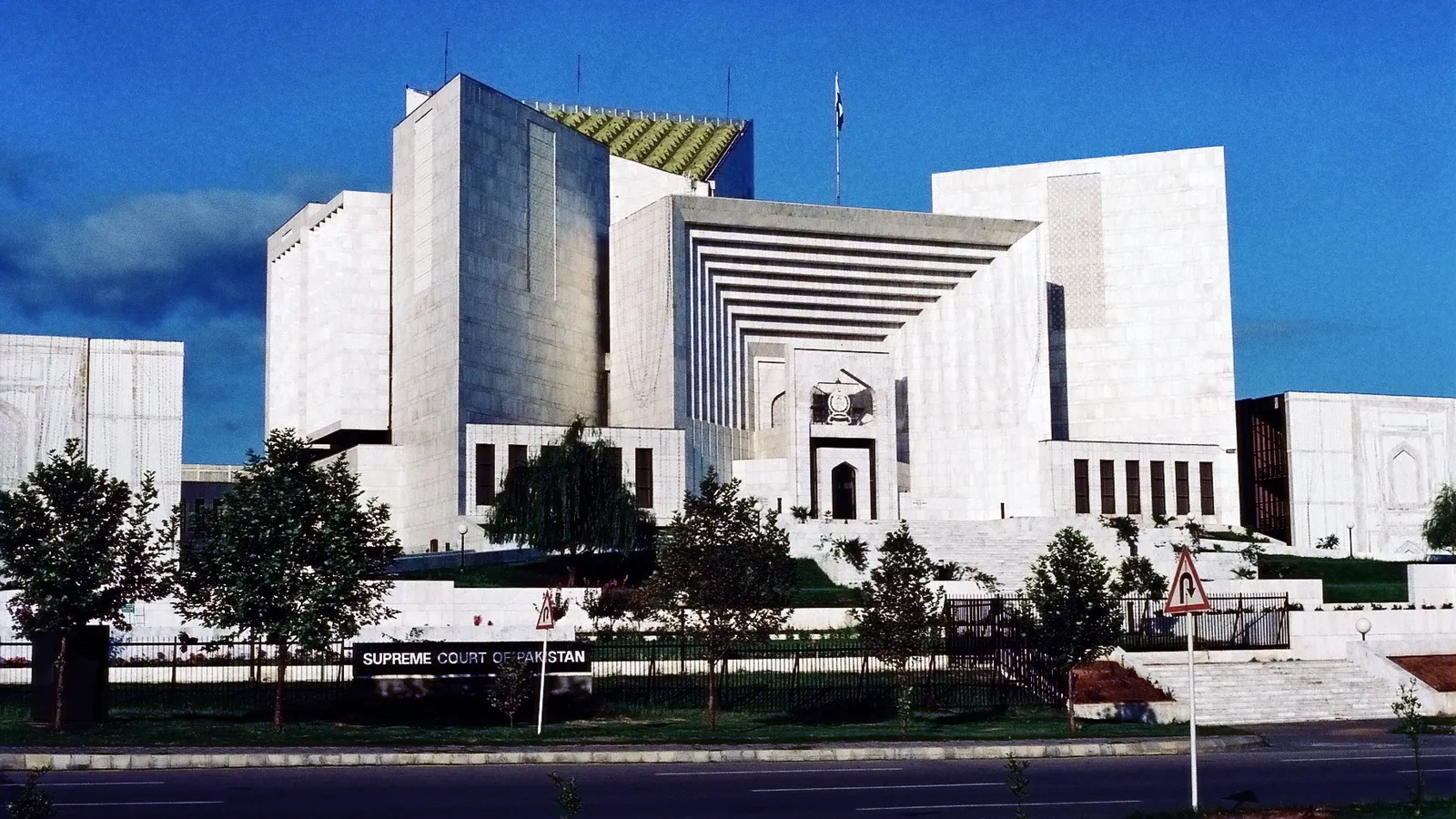
The Supreme Court has closed a petition filed by lawyers Imaan Zainab Mazari-Hazir and Hadi Ali Chattha in the security breach case, saying events had overtaken it, and sent the matter back to the Islamabad High Court (IHC). The order was passed on Wednesday by a three-member bench headed by Justice Muhammad Ali Mazhar.
What the court decided
During the hearing, Justice Mazhar observed that the petition had become “infructuous” because the trial had finished and the couple had been convicted. A petition is infructuous when a later event, here the conviction, means that the relief it asked for no longer has a practical effect. The court then directed the IHC to decide on a petition the couple had filed in the same case. The Supreme Court did not rule on the merits of the case, so nothing in Wednesday’s order says whether the conviction is right or wrong.
The conviction
On October 29, an Islamabad anti-terrorism court (ATC) sentenced both lawyers to 10 years in prison in the security breach case. The case dates to 2024 and concerns the disruption of the security route of an international cricket team and incitement to public unrest, as the case is described. The couple, accused of removing barriers from the route, were indicted on October 7. A formal trial began after both pleaded not guilty. They were being tried inside jail, and both had been on bail in this case before the verdict.
The sentence was handed down under three separate provisions, according to the judgment, a copy of which Dawn has seen:
| Provision | Offence | Sentence for each |
|---|---|---|
| Section 7(h) of the Anti-Terrorism Act 1997, read with Section 6(2)(m) | Serious coercion or intimidation of a public servant to force or stop him doing his lawful duty | 10 years and a fine of Rs100,000 |
| Section 186 of the Pakistan Penal Code | Obstructing a public servant in the discharge of public functions | One year and a fine of Rs50,000 |
| Section 353 of the Pakistan Penal Code | Assault or criminal force to deter a public servant from duty | Two years |
All the sentences run concurrently, which means the longest, 10 years, is the effective term.
What happens next
The IHC now has to decide the petition that the Supreme Court sent back. The report does not say what the petition asks for, and nothing in the order sets a date. A convicted person can also challenge the verdict itself in appeal before the High Court, and we have not seen a report on whether the couple have done so. The couple’s lawyers had not commented at the time of the report.
We covered the verdict at the time, in our report on the 10-year sentences, and the earlier proceedings, including the bail hearing in a separate protest case.
Why it matters
The case has drawn attention because both defendants are lawyers and because the sentence under the Anti-Terrorism Act is long for an offence that involves obstructing a route. The prosecution’s position is that removing barriers on the route of a visiting team endangered security and obstructed officials in their duty. The couple have denied wrongdoing, as they did when they pleaded not guilty. Those are arguments for the appeal courts, and Wednesday’s order does not settle them.
What the order does show is how quickly the legal route has shifted from bail and trial, to conviction, to the High Court. The Supreme Court has chosen not to take up the matter itself at this stage.
What we do not know
- The date of the IHC hearing and what exactly the petition seeks.
- Whether the couple will appeal the conviction, and when.
- Where they are held while the process goes on.
What to watch is the IHC’s listing of the petition, any appeal filed against the October 29 judgment, and statements from the couple’s legal team.



Comments
Comments are reviewed by our editors before they appear. Please keep them civil and on topic. See our terms.
No comments yet. Be the first to share your view.