

Karachi’s Safe City cameras helped trace and return 1,631 snatched or stolen vehicles in the first 10 months of this year, officials told Sindh Chief Minister Syed Murad Ali Shah at a review meeting on Tuesday. The same system helped arrest 84 wanted people and supplied digital evidence in 642 cases to investigating agencies, according to an official statement reported by Dawn.
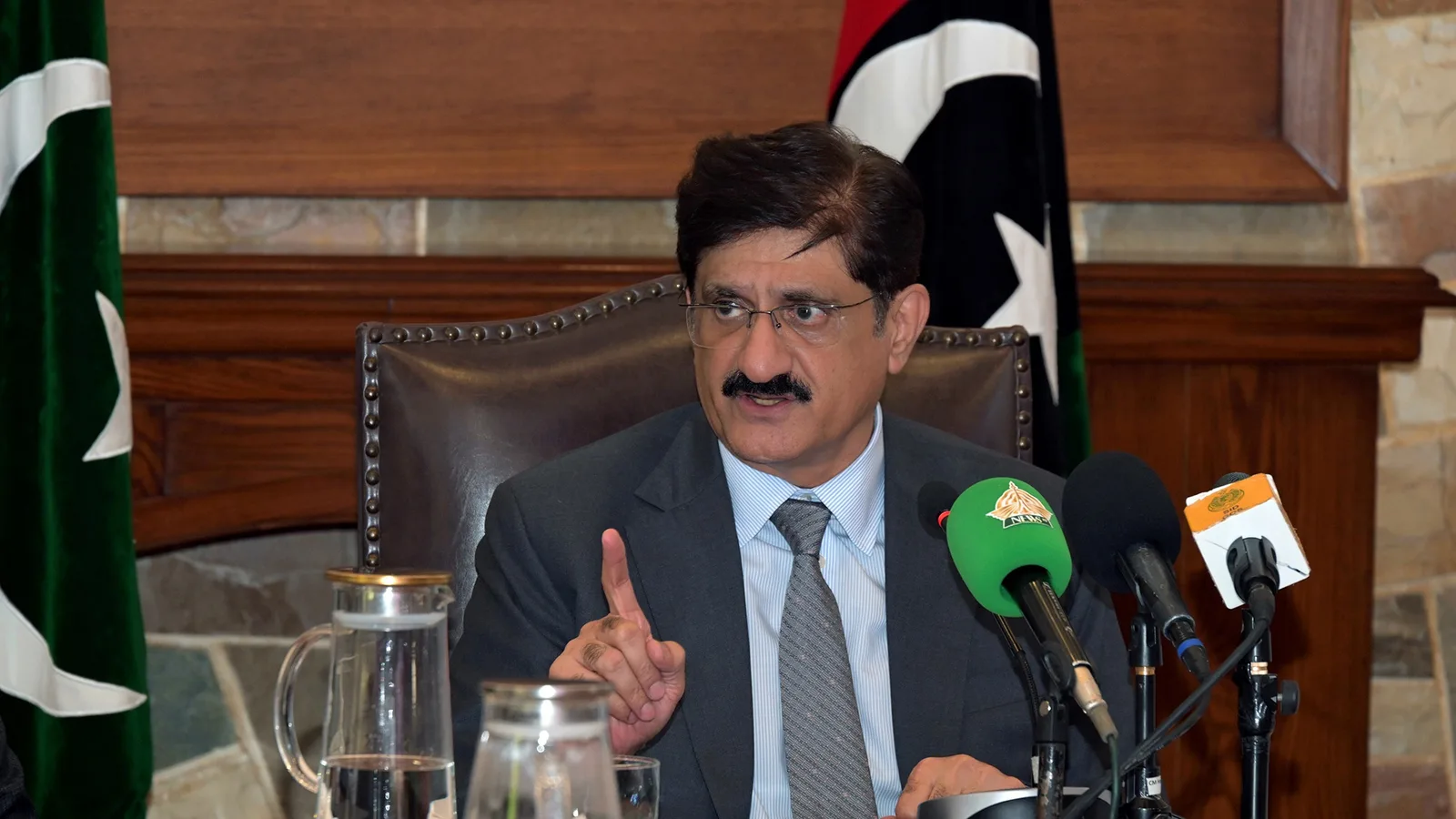
The meeting at CM House reviewed the Karachi Safe City Project (KSCP), covering its operations, money, staffing and results from January to October 2026. Shah told the Sindh Safe Cities Authority (SSCA) to build up the project so that the cameras deliver safer streets and better policing, the statement said.
What the system covers
The National Radio and Telecommunication Corporation (NRTC) built Phase I, which consists of:
- 300 pole sites carrying 1,300 cameras
- 18 points of presence, which are the network hubs that link the cameras
- a data centre
- a network operations centre
What officials say it has done
Officials also gave examples of how camera footage and automatic number plate reading were used. They said the system helped police crack a house robbery in Gulistan-i-Jauhar, catch men who posed as policemen to rob people, find a stolen car in two hours and 15 minutes, and intercept a vehicle a court had asked police to trace.
| Measure (January to October 2026) | Figure |
|---|---|
| Snatched or stolen vehicles traced and handed over | 1,631 |
| Wanted persons arrested | 84 |
| Cases where digital evidence was supplied | 642 |
The chief minister welcomed the results and asked the police and the SSCA to work more closely, so that the technology helps detect crime, speeds up response and supports investigations built on evidence.
Staffing, budget and what is next
The authority approved an organisational structure of 275 posts:
| Section | Posts |
|---|---|
| Administration and management | 48 |
| Command and control | 97 |
| Mobile surveillance | 112 |
| Technical and ICT | 18 |
Shah said the authority needed trained professionals, above all in cybersecurity, AI, software, networks and digital forensics, to be hired in stages as money allows. He approved three new technical posts: a chief technology officer, a chief information security officer, and a security operations centre analyst, who would also work in digital forensics and incident response.
The meeting also went over earlier decisions. The Provincial Development Working Party has approved the Phase-II PC-I, the planning document needed to fund the next stage. Recruitment and notification of service regulations were also on the list, and the authority’s budget for 2026-27 is Rs575 million. Emergency response vehicles and a proposal for Safe City projects at divisional level were also discussed.
Home Minister Ziaul Hassan Lanjar and Chief Secretary Asif Hyder Shah attended. We reported earlier on Lanjar’s role in a different case, the joint investigation team in the Mir Raza case.
Why it matters
Camera evidence and number plate recognition give police a way to recover vehicles and build cases that do not rely only on witnesses, and the officials’ examples, from a house robbery to a two-hour car recovery, show how that works in practice. Compared with Punjab, where we reported a Safe City expansion across 98 tehsils, Karachi’s system is at Phase I, with the Phase II planning document approved.
The chief minister’s own words point to the real test. He said the project must become a working public-safety and law-enforcement system, not just infrastructure, and be judged by safer neighbourhoods, a stronger police response and public trust.
What the numbers do not show
The official figures are impressive on their own terms, but several questions are open:
- How many vehicles were stolen in the same period, so that 1,631 recoveries can be read as a share.
- How many of the 642 pieces of digital evidence led to charges or convictions.
- How many of the 1,300 cameras were working at any time, and in which parts of the city.
- When Phase II will begin and how many cameras it will add; the statement said only that its planning document has been approved.
Until those numbers are published, the review offers a positive picture drawn from the authority’s own data.
What we do not know
- The cost of Phase I, which the statement did not give.
- A timetable for Phase II or for the recruitment of the 275 posts.


Comments
Comments are reviewed by our editors before they appear. Please keep them civil and on topic. See our terms.
No comments yet. Be the first to share your view.