

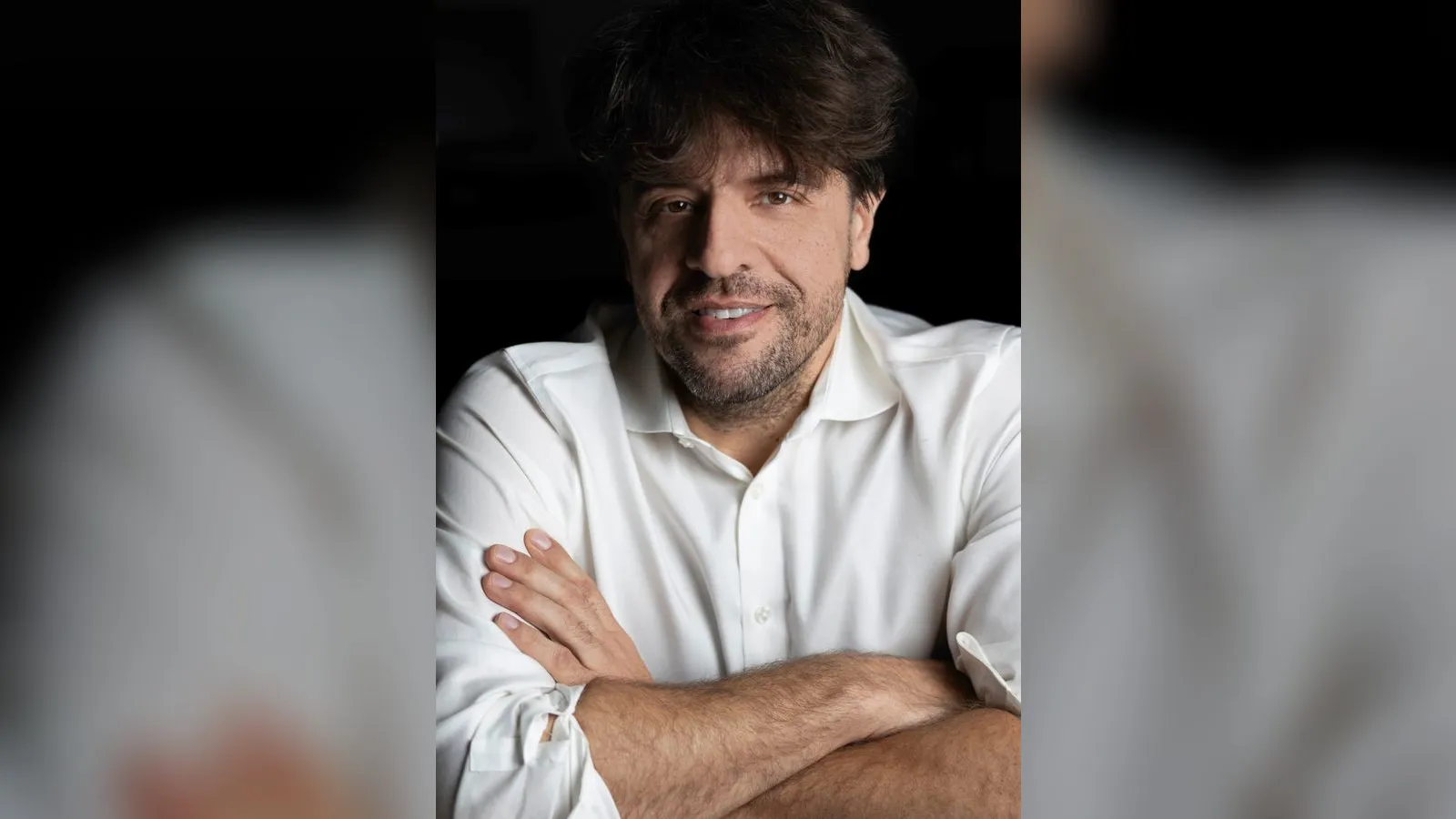
American scientist Karl Deisseroth and Germans Peter Hegemann and Georg Nagel have won the 2026 Nobel Prize in Physiology or Medicine for discoveries that let researchers switch brain cells on and off with light, transforming how scientists study the brain.
The Nobel Assembly at Sweden’s Karolinska Institute said the three were chosen for their “discoveries concerning light-gated ion channels and optogenetics”, Dawn reported, citing Reuters.
What is optogenetics?
Optogenetics “makes it possible to switch on, or off, the activity of individual nerve cells in a living brain”, said Thomas Perlmann, Secretary-General of the Nobel Assembly. “This method is now being used in laboratories around the world to reveal the brain’s mysteries.”
In simple terms, scientists place a light-sensitive protein, taken from algae, into chosen nerve cells. Shining light on those cells then turns them on or off, letting researchers see exactly what each group of cells does.
How the discovery happened
- Early 1990s: Hegemann studied how a green alga, Chlamydomonas, reacts to light within half a millisecond, and suggested a single protein both captured light and acted as a channel for electrical signals
- The test: Nagel injected the alga’s genes into frog eggs and discovered channelrhodopsin-2, a channel that opens when exposed to light
- 2003: the pair showed the protein could be placed in human and hamster cells to generate electrical impulses with light
- 2005: Deisseroth, at Stanford University, demonstrated the technique in rat nerve cells; it was named optogenetics a year later
From the lab to patients
The work is already moving towards treatments:
- Restoring sight: in clinical trials, researchers are restoring vision to people blinded by retinitis pigmentosa by placing a light-sensitive protein in the retina
- Better hearing: researchers hope it could improve cochlear implants by stimulating the hearing nerve more precisely than current electrical devices
“Friends” sharing the honour
Perlmann said he spoke to all three winners on Monday morning and that they were surprised and delighted. “All three said the same thing, that they thought it was absolutely wonderful to receive the prize with the other two and they call them my friends,” he said.
Deisseroth is 54, Hegemann 71 and Nagel 73. They will share prize money of 12 million Swedish crowns, about $1.2 million.
The Nobel season begins
The medicine prize traditionally opens the Nobel announcements, with physics, chemistry, literature, peace and economics to follow over the coming days. The prizes will be presented on December 10, the anniversary of Alfred Nobel’s death, in Stockholm, apart from the Peace Prize, which is awarded in Oslo.
Past medicine winners include Alexander Fleming, honoured in 1945 for penicillin, and Karl Landsteiner, who won in 1930 for discovering human blood groups. Last year’s prize went to Americans Mary Brunkow and Fred Ramsdell and Japan’s Shimon Sakaguchi for work on how the immune system spares healthy cells.
Why it matters
Brain disorders, from blindness to depression and Parkinson’s disease, affect millions of people, including in Pakistan. Optogenetics has given scientists a precise tool to understand how the brain works, and the first treatments based on it are now being tested on patients.
This article draws on reporting by Dawn and Reuters.




Comments
Comments are reviewed by our editors before they appear. Please keep them civil and on topic. See our terms.
No comments yet. Be the first to share your view.