
The Indus Compass Daily
Trump says victory over Iran is 'at hand' and urges Tehran to make a deal
Trump told troops victory over Iran was 'at hand' and urged Tehran to make a deal, as Kuwait blamed Iran for drone attacks that killed two Italians.
By Bilal Javed
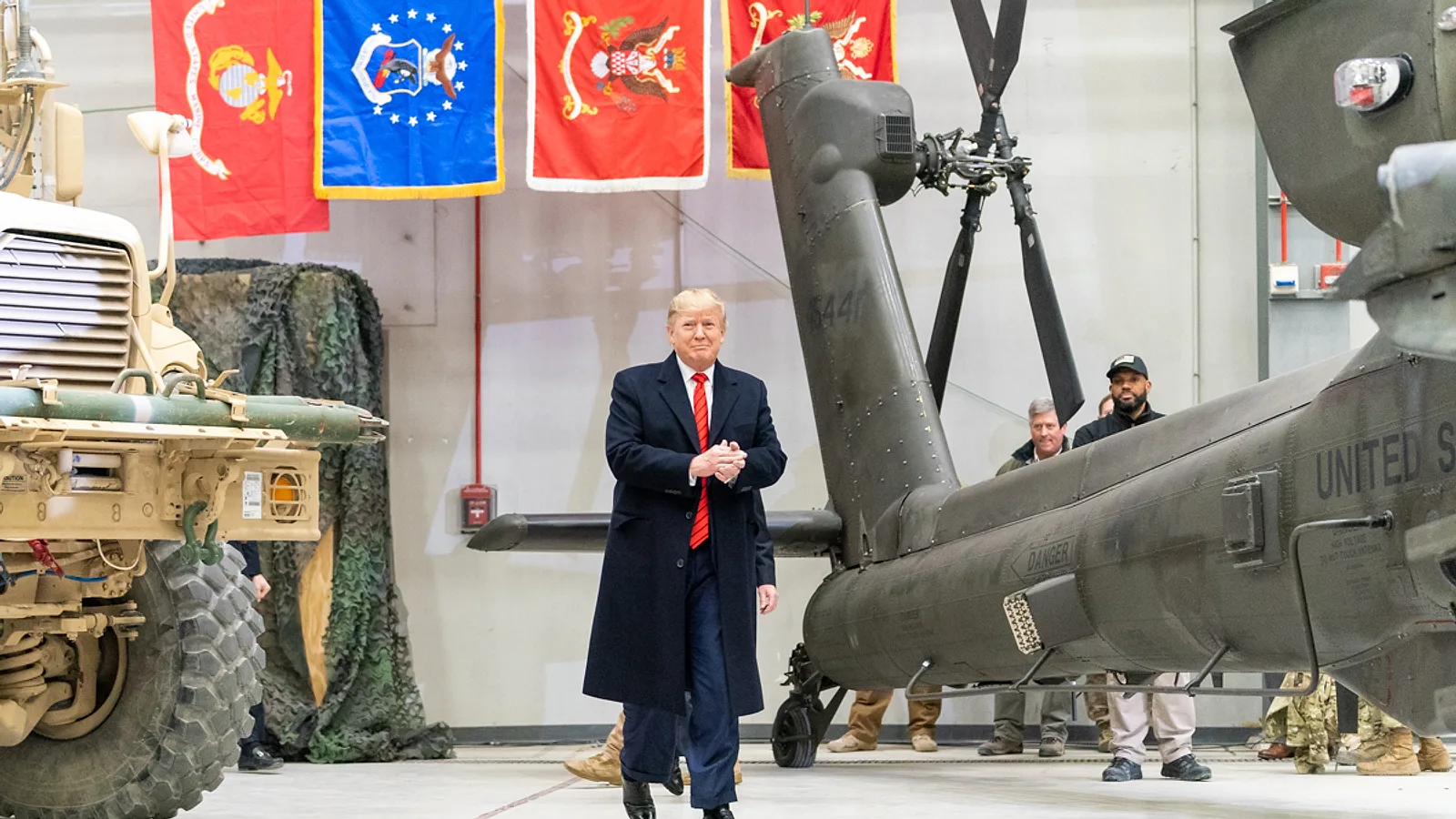
US President Donald Trump has told American troops that victory over Iran is “at hand”, while saying he is still giving Tehran a chance to make a deal and doubting it will take one.
Trump made the remarks on Thursday while calling US service members to mark Thanksgiving, according to The Express Tribune. The end of the war, he suggested, was his to decide. Tehran had “every chance to make a deal”, he said, but he doubted it would take it.
What Trump claimed
Trump’s remarks were a mix of military claims and energy politics. None of the military figures has been independently confirmed.
- Hormuz: he said the United States had “launched 150 missiles” to stop Iranian missiles and drones from hitting commercial ships in the Strait of Hormuz.
- Nuclear weapons: he repeated that Iran would not be allowed to build a bomb, telling the troops their work made sure of it.
- Oil: he argued that America has no need of Gulf oil, claiming that its own reserves and Venezuela’s together make up over half of global supply. US forces were in the region, he said, to protect Israel and the wider Middle East.
He finished by saying the region still needed peace, warning of “turmoil” without it.
Kuwait blames Iran for deadly drone attacks
The remarks came as the war spread further into the Gulf. Kuwaiti authorities blamed Iran for drone attacks on the country. Four people were first reported hurt by falling shrapnel: two Italians, a Kuwaiti and a Pakistani. Kuwait’s defence ministry later said the two Italian nationals had died of their injuries. There was no update on the condition of the Pakistani national.
Tehran rejected the blame. Abolfazl Shekarchi, who speaks for Iran’s armed forces, said Iran had not struck any vital site in Kuwait and pointed the finger at Israel and the US, calling the attacks false-flag operations. Iran’s foreign minister, Abbas Araghchi, told his Kuwaiti counterpart that Tehran was not behind the attack and offered a joint investigation, the Tribune reported. Syria said it stood with Kuwait and condemned what it called aggression against the Gulf state.
Ships in the region remain at risk. Attacks on vessels near Hormuz reached a wartime high in October, and traffic through the strait is still far below its pre-war level.
Pakistan’s place in this
Islamabad has kept a line open to both capitals. In June it brokered a deal that paused the US-Iran fighting for a short time and mapped out steps to reopen Hormuz and restart nuclear talks. The pause did not last, with Washington and Tehran blaming each other, and Qatar and Pakistan have shuttled between them since.
Defence Minister Khawaja Asif said on Thursday that Pakistan’s part had been “constructive” but that the outcome remained “fragile”, Dawn reported. Foreign Minister Ishaq Dar has also called for a regional security framework to steady the Gulf.
Why it matters for Pakistan
Three things are at stake for Pakistan. The first is its people: hundreds of thousands of Pakistanis work in the Gulf, and a Pakistani was among those hurt in Kuwait. The second is fuel: Pakistan imports most of its oil through the Gulf, so every attack near Hormuz feeds into prices at home. The third is diplomacy. Islamabad hosts the Makkah Defence Alliance with Saudi Arabia and Türkiye today, while trying to stay a channel to Tehran. Trump’s talk of victory, and his doubt that Iran wants a deal, make that balancing act harder.
What to watch
- Whether Washington makes a new offer to Tehran, and through whom.
- Any word on the Pakistani injured in Kuwait from the Foreign Office or Pakistan’s embassy in Kuwait.
- What the Makkah Defence Alliance says about the Gulf when its Islamabad meeting ends.