
The Indus Compass Daily
Israeli strikes flatten five Gaza homes, leaving families out in the cold
Israeli strikes flattened five residential buildings in eastern Gaza City, displacing dozens of families, as the health ministry reported 19 dead in 48 hours.
By Bilal Javed
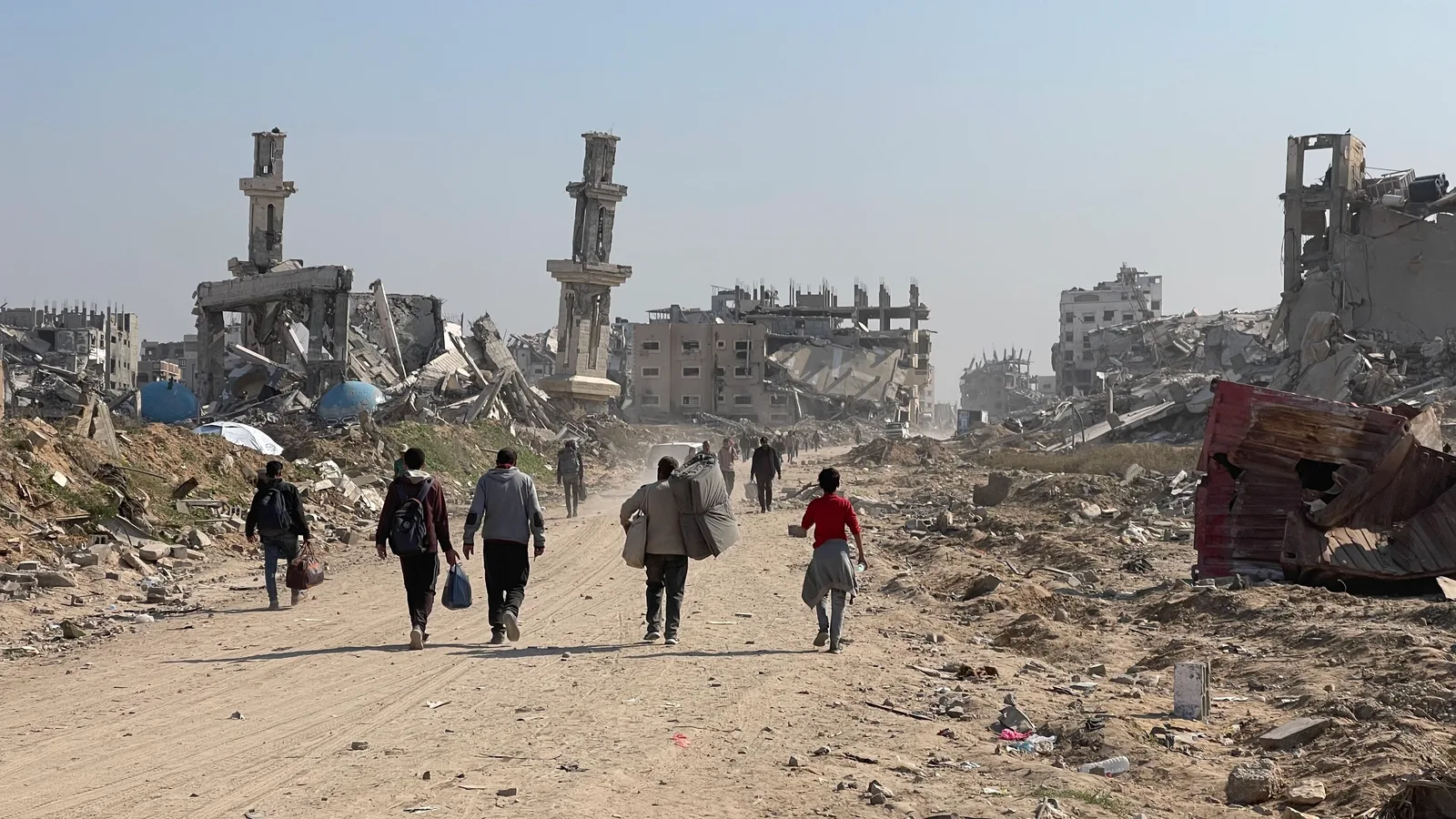
Dozens of Palestinian families in eastern Gaza City spent Thursday night in the open after Israeli warplanes destroyed five multi-storey residential buildings, home to dozens of apartments, in seven airstrikes.
Witnesses told the Anadolu news agency that the strikes in the Al-Tuffah and Al-Shujaiyya neighbourhoods set off panic. Families fled into the cold with no time to take clothes, blankets or other basics, and with few places left to go in a city where much of the housing has already been destroyed.
Where the strikes hit
- Al-Tuffah: four airstrikes destroyed three residential buildings near the Al-Sanafor junction, close to areas under Israeli military control, and damaged homes around them.
- Al-Shujaiyya: three airstrikes brought down two multi-storey buildings near the Al-Shujaiyya junction, outside the zone Israel controls, after evacuation warnings.
The blasts also tore through nearby houses and the tents of families who had already lost their homes in the war. With winter setting in, that leaves many with nothing between them and falling temperatures.
The cost in lives
Gaza’s Health Ministry said on Thursday that 19 Palestinians had been killed and 48 injured across the territory in the previous 48 hours: 18 in new Israeli attacks and one who died of earlier wounds.
Among the dead were Khaled Mahmoud Abu Nada, 56, and his wife, Abeer Mohammed Abu Nada, 49, killed when an airstrike hit their apartment in Deir al-Balah, in central Gaza, according to local sources. He was Gaza’s deputy education minister. Israeli caretaker Prime Minister Benjamin Netanyahu and Defence Minister Israel Katz claimed he was a Hamas figure in charge of its economy and education portfolios, and claimed that 80 Hamas officials and fighters had been killed in October. Those claims have not been independently verified, and Hamas did not immediately respond.
In northern Gaza, an Israeli drone strike on a gathering in the al-Shati refugee camp killed three people and seriously wounded another, according to a medical source at al-Shifa Hospital. In central Gaza, the Israeli army blew up homes near its positions east of the al-Maghazi refugee camp, witnesses said.
A ceasefire in name
A ceasefire took effect on October 10, 2025. Since then, according to the Health Ministry’s figures released on Monday, Israeli attacks have killed 1,679 Palestinians and wounded 6,100. Bombardments, gunfire and the demolition of homes have continued across the Strip, as in the strikes that killed eight Palestinians, five of them police officers earlier this month, more than three years after the war on Gaza began on October 8, 2023, and left most of the territory in ruins.
Why it matters
Each destroyed building is not just a strike on a structure but the loss of shelter for families who have nowhere else to go, at the start of winter, in a territory where aid and building materials remain scarce. The ceasefire was meant to stop exactly this. Pakistan has repeatedly called at the United Nations for an end to Israeli attacks on Gaza and for unhindered humanitarian access, and Prime Minister Shehbaz Sharif ordered a push for more aid this month, and the steady toll since October 2025 shows how far the truce is from the protection Palestinians were promised.
What to watch
- New casualty figures from Gaza’s Health Ministry.
- Whether mediators press Israel over continued strikes under the ceasefire.
- Shelter and winter aid for families displaced in Gaza City.